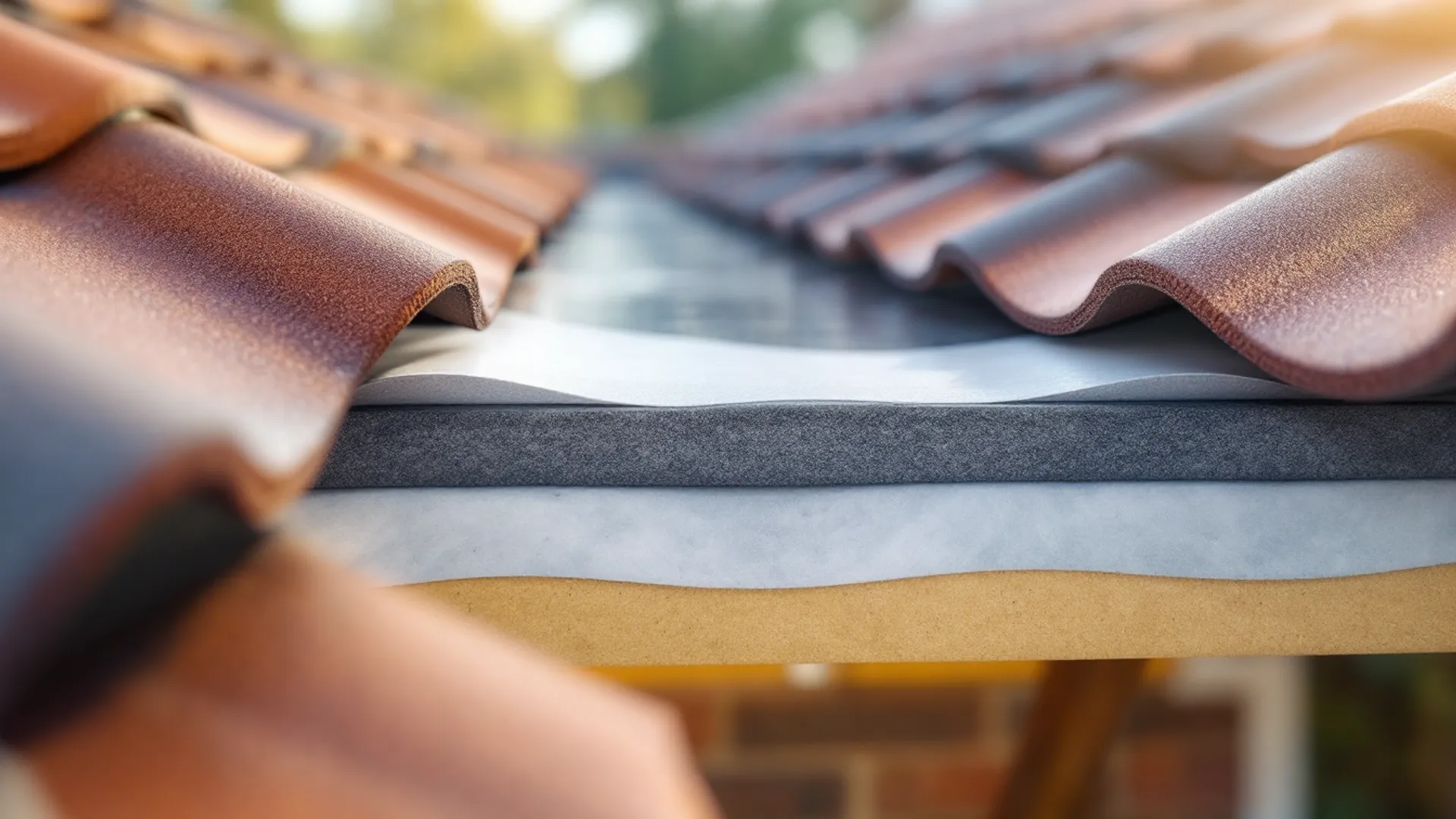
Roof underlay is the waterproof layer under your tiles that most homeowners never think about, until it fails. It does more work than it gets credit for. It is one of the first things worth checking when a roof leaks with no obvious cause above.
What roof underlay does
Underlay is also called lining, felt or membrane, depending on who you ask and when the roof was built. It is a continuous waterproof layer fitted under the battens and tiles of a pitched roof, and it acts as a safety net.
Tiles and slates shed most rain on their own. Wind-driven rain, hairline cracks, and small gaps at edges still let some water through, though. The underlay catches that water and channels it down to the gutter, rather than letting it reach the timbers or your ceiling.
Breathable vs non-breathable membrane
Older roofs typically used a non-breathable bituminous felt. It stops water entering, but it also traps moisture rising from inside the house. It needs proper loft ventilation, such as soffit and ridge vents, to stop condensation building up beneath it.
Modern breathable membranes work differently. They let water vapour pass through from the warm side, while still blocking liquid water from outside. This lowers the risk of condensation-driven timber decay, and most re-roofs today specify a breathable membrane as standard.
Signs your underlay has failed
Underlay is hidden, so failure signs are usually indirect. Look for damp patches on the ceiling with no matching tile damage. A musty smell in the loft, or sagging on the membrane where you can see it, are other warning signs.
The most telling sign is a leak that keeps reappearing in slightly different spots after a roofer has fixed individual tiles. Our leaking roof guide explains why the entry point is often nowhere near the stain inside. Our leak repair cost guide covers what a fix like this typically runs to.
Do you need to re-felt when re-roofing
In almost every case, yes. The underlay is only accessible while the tiles are off, so a re-roof is the practical, and usually the only sensible, moment to replace it. Reusing decades-old, likely-perished felt to save a small amount on a full re-roof rarely makes sense.
Under Approved Document L, replacing more than 50% of a roof’s surface counts as renovating that “thermal element,” which brings the job under Building Regulations. That means a requirement to bring the insulation up to a current standard, where that is practical to achieve. Ask whether your quote includes this, and check our what to check with a roof installer guide before you agree a price. If you are getting quotes, confirm new underlay is explicitly included and named as a breathable membrane, not left vague as “felt”.
Underlay at chimneys and after storms
Underlay detailing matters most at junctions, and a chimney is the trickiest one on the roof. The membrane has to turn up and seal against the stack correctly, or water tracks straight past it. Our chimney flashing leaks guide covers this failure point in detail. A poor upstand here causes leaks that look like a chimney problem, but are really an underlay one.
A storm can also strip tiles and expose bare underlay to direct weather for the first time. See our storm damage repair guide for what to do next. Our how often to inspect a roof guide helps you catch underlay problems before a storm finds them for you.
Underlay, slates and gutters
The covering above your underlay matters too. Our slate vs tile guide covers the pitched option, and our roofing felt guide covers flat, if you are choosing a covering as part of the same job. A blocked gutter forces water back up under the eaves, instead of away from the house. Check our blocked gutters guide too, since that failure can soak underlay from below rather than above.
Find Trusted Roofers connects UK homeowners with local roofers who specify the right underlay and loft ventilation for your roof, not whatever is cheapest on the van. That includes roof replacement specialists in Norwich and roofers in Wakefield and Northampton, and roofers serving Nottingham. See our roof replacement guide for the full picture, tell us about the job, and we will match you with a roofer covering your postcode.
Roof Underlay & Lining: A UK Guide — FAQs
What is the difference between roof underlay and roofing felt?
They're often the same thing described two ways. The layer under pitched-roof tiles used to be called 'roofing felt' and is now more accurately called underlay or membrane, since modern versions are breathable synthetic sheets rather than traditional bitumen felt.
Do I need to replace the underlay when re-roofing?
Almost always, yes. Underlay is only accessible while the tiles are off, and old bituminous felt has usually perished by the time a re-roof is due. It's standard practice to renew it while the roof is stripped anyway.
What happens if roof underlay fails?
A failed underlay no longer catches water that gets past the tiles. Since even a hairline crack or wind-driven rain under a tile edge can then reach the timbers, the damage often shows up as a ceiling leak with no obvious cause above it.
Is breathable roofing membrane better than old felt?
For most modern re-roofs, yes. Breathable membranes let moisture vapour from inside the loft escape through the roof rather than trapping it, while still stopping wind-driven rain from entering. This reduces the risk of condensation and timber decay.